
With an implant, how steadily it holds up over the years matters more than the price on the day.
We plan around how long it can last, not around how cheaply it can be done.
When full-arch implants are considered — most teeth missing, an uncomfortable denture, too little bone



We have met many patients over the years.
- Someone who had worn a denture for ten years and wanted something more comfortable
- Someone whose teeth were bad but who put it off out of fear, and finally decided to go ahead
- Someone too busy with work to get treatment, who took the chance to have it all done
- Someone whose parent's teeth were failing, who came to the consultation together with them
- Someone told the bone was too thin for implants, who finished treatment with implants after all
How to choose full-arch treatment — how long it lasts, not what it costs
Talking with patients day after day taught us a great deal.
We know it has been hard. We know how much thought went into deciding on full-arch treatment.

Full-arch treatment is a large undertaking.
It is a significant commitment of time and money, and it needs to be done properly. So compare ‘value’, not price.
Not the lowest price but how long it lasts.
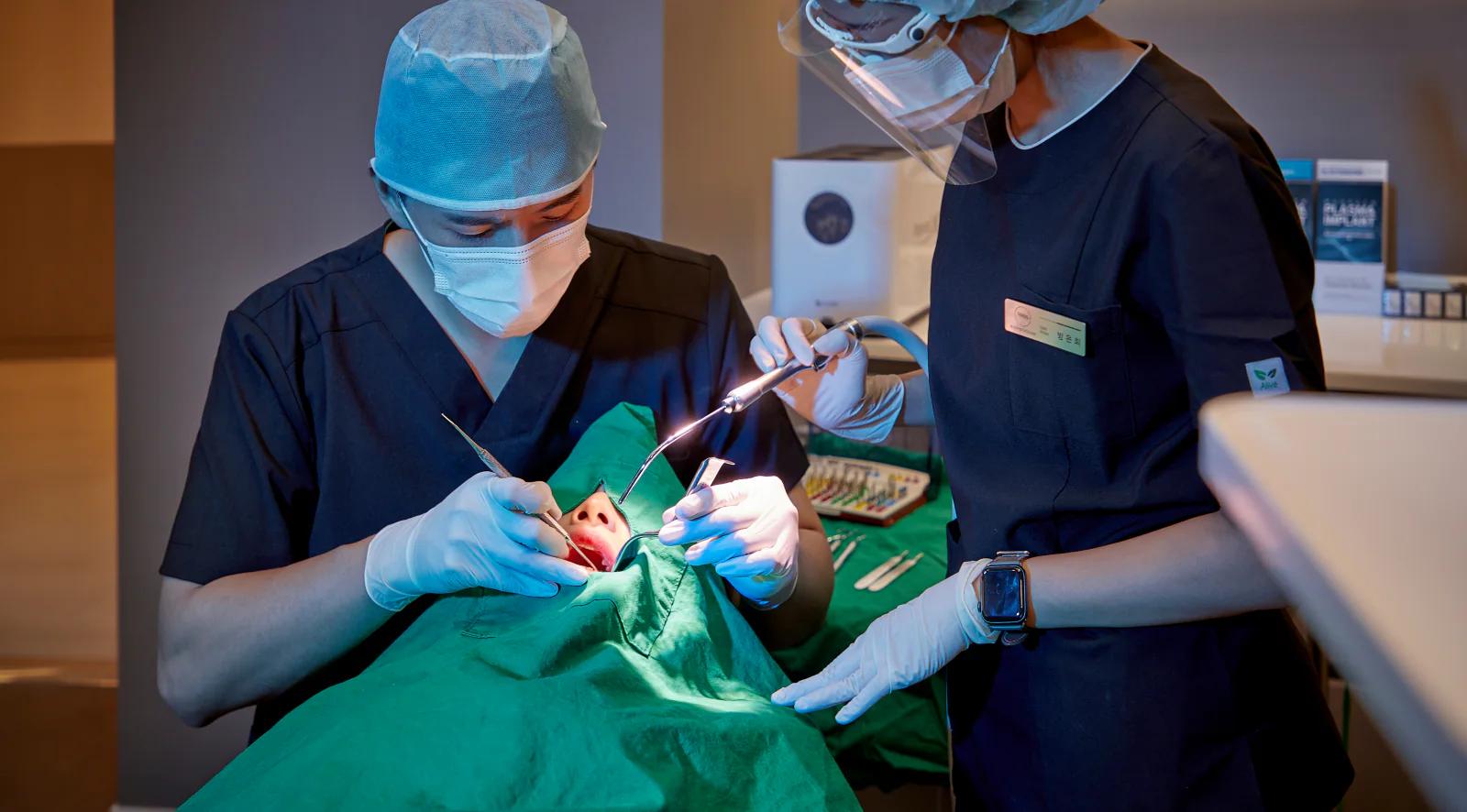
A precise treatment plan from our director, who also teaches as a visiting professor
Where the implants go, at what angle and how deep changes the result and how you get on with them.
Careful aftercare and a regular check-up programme
A structured recall programme lets us check the implant, the gums around it and your bite at regular visits.
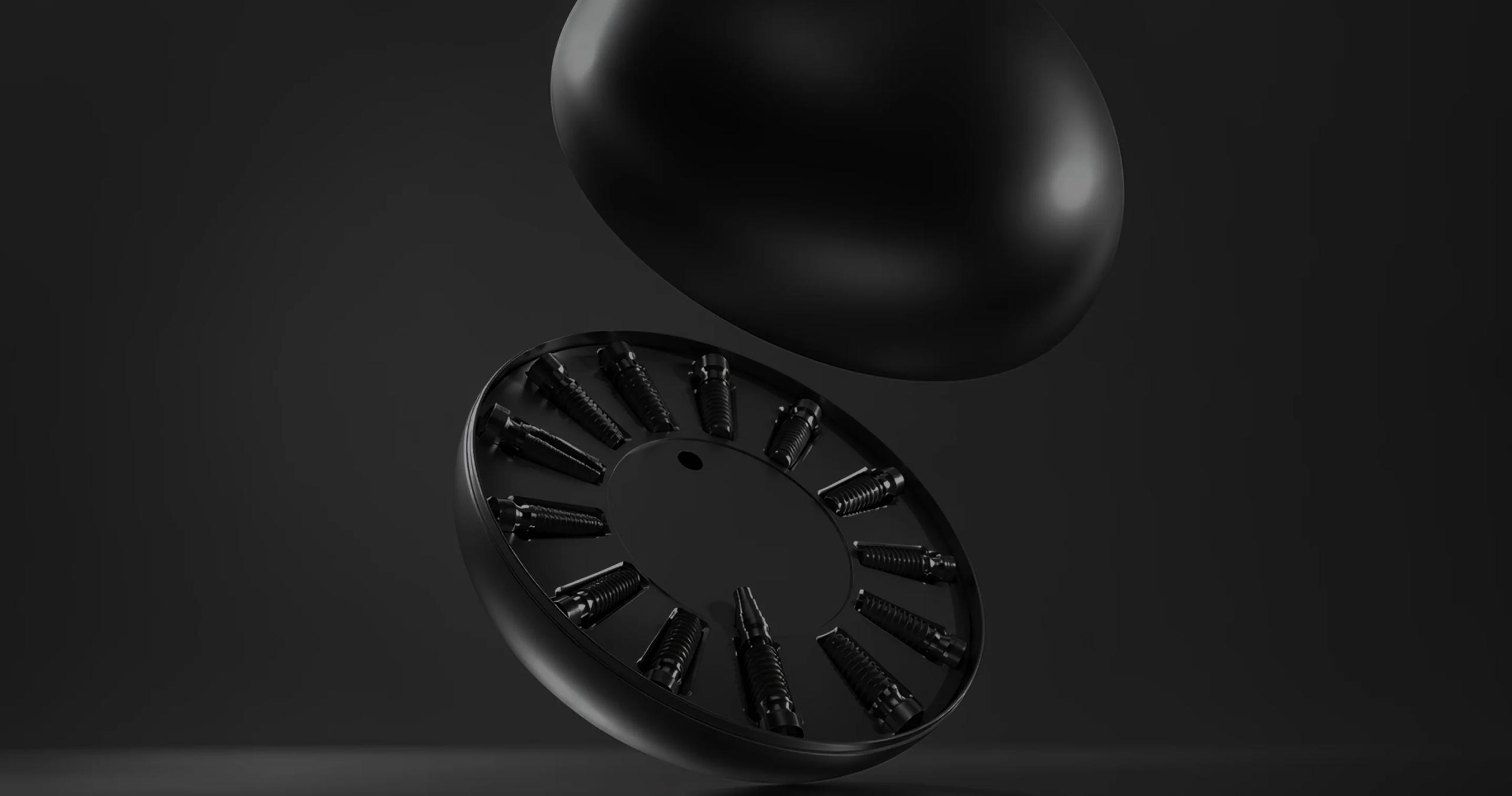
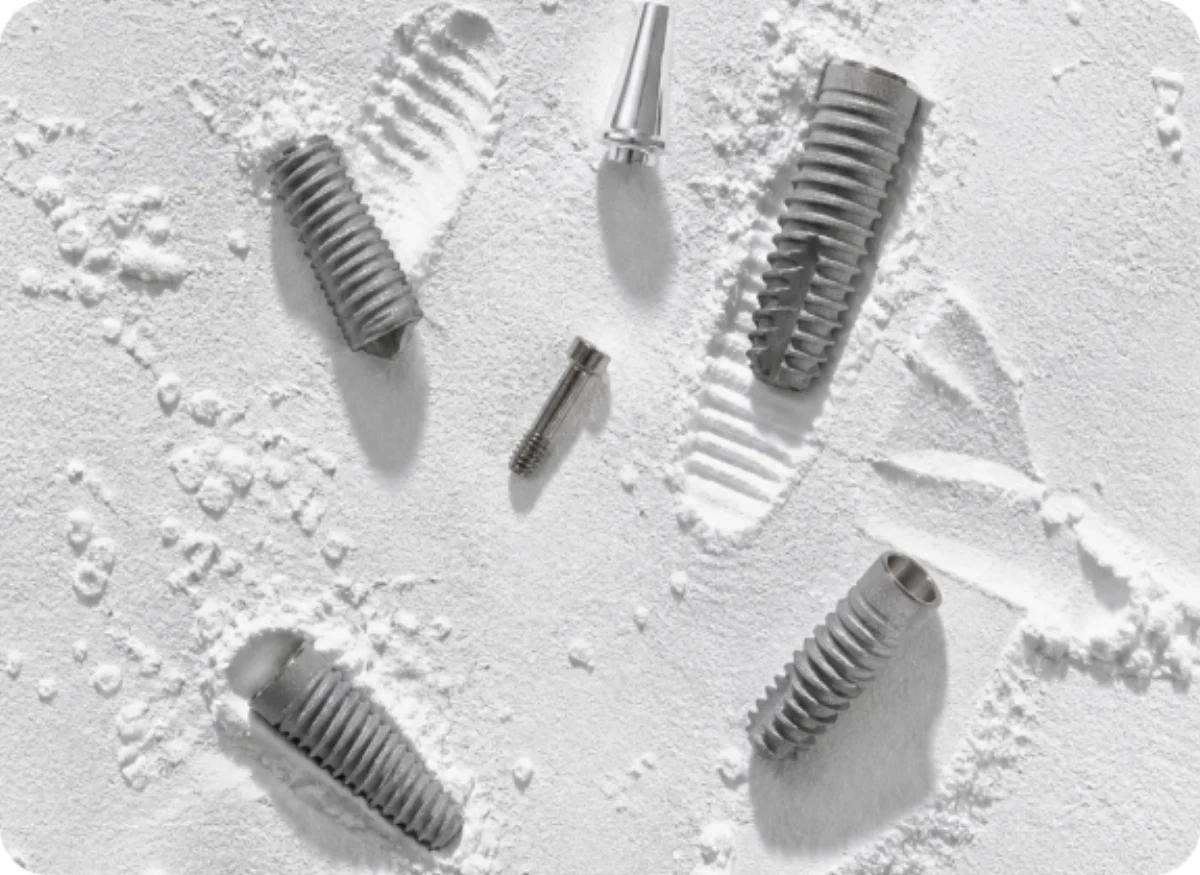
Established materials, not budget substitutes
The fixtures and bone graft materials used in surgery are ones with a documented record.
| Implant systems | Bone graft and other materials |
|---|---|
| Dentis | The Graft bone graft, barrier membrane |
| MegaGen | Osstem bone graft (Sure Oss) |
| Osstem | PDRN |
| Straumann | — |
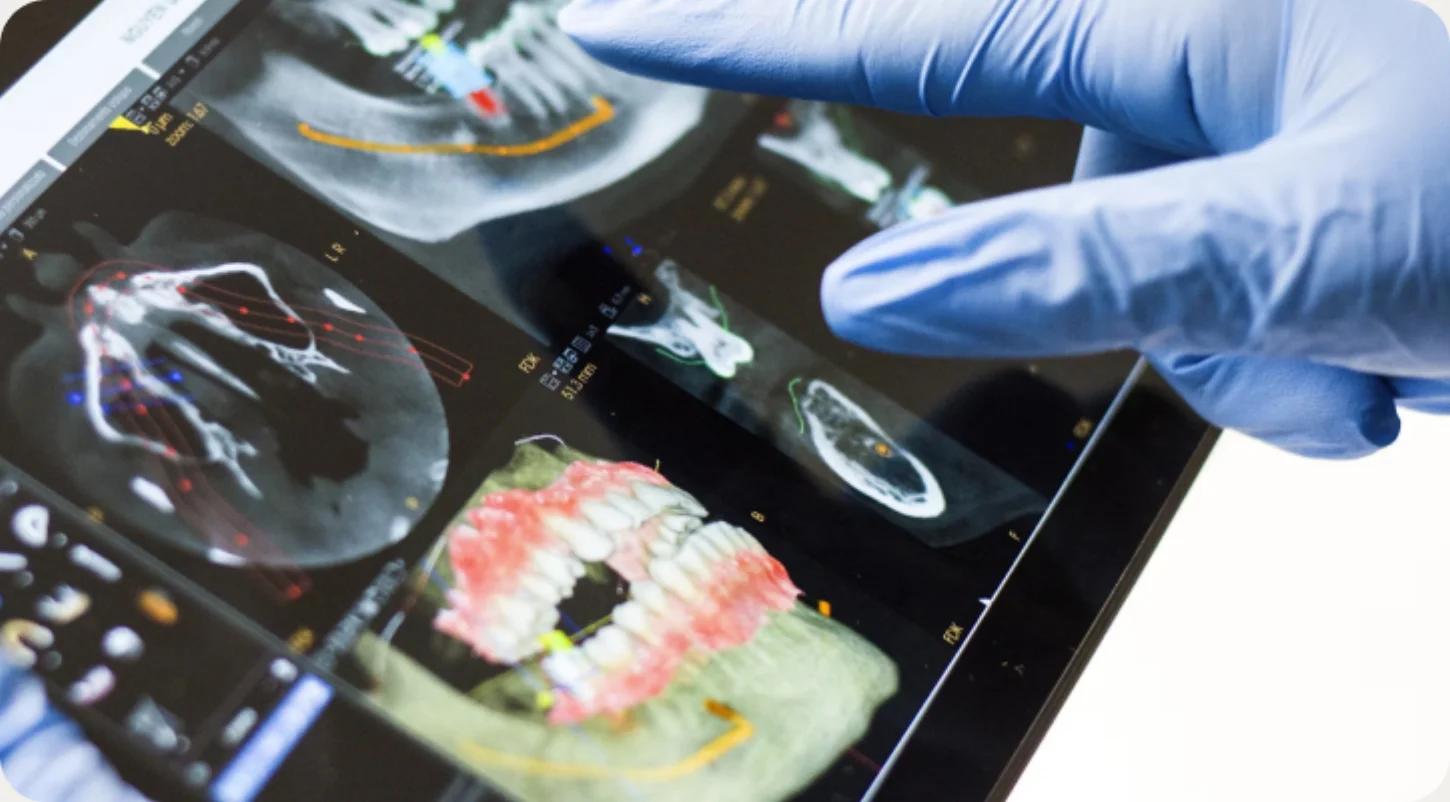
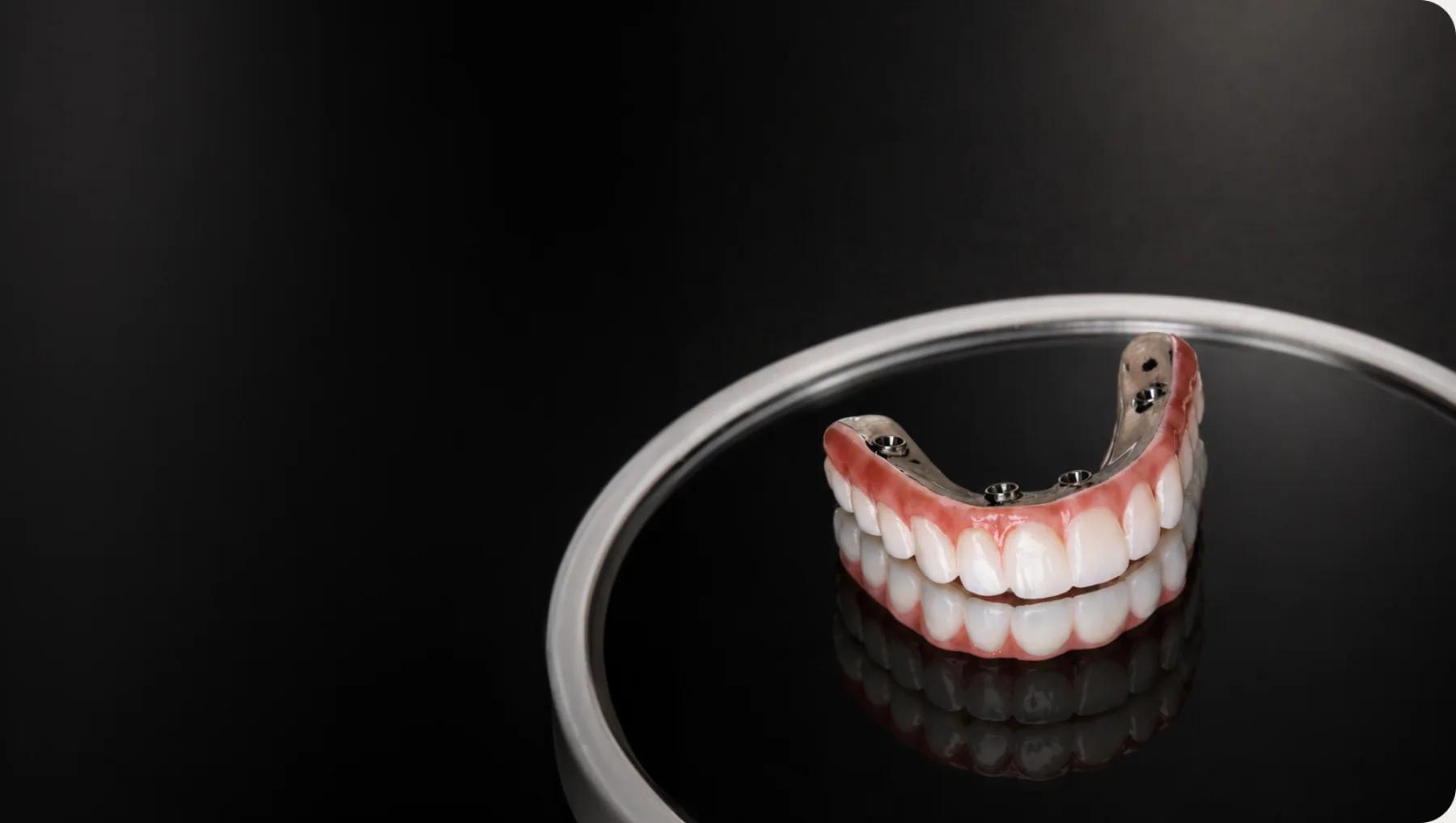
Full-arch treatment is a long road. Our team will be with you the whole way.
- Finding
- The back teeth on both sides had been missing for a long time, so all the chewing was being done on the front teeth.
- Treatment
- Teeth that could not be kept were extracted and implants were placed on both sides.
- Finding
- Decay had broken the back teeth on both sides, so they were no longer working.
- Treatment
- Implants were placed with bone grafting, and a gap between the front teeth was closed with crowns.
- Finding
- A full upper denture was being worn, and eating with it was difficult.
- Treatment
- Decayed lower teeth were extracted and full-arch implants were placed in both jaws.
- Finding
- Most of the teeth were broken down by decay and there was a lot of bone loss.
- Treatment
- Teeth that could be kept were kept, and full-arch implants were placed in both jaws.
- Finding
- There was very little bone left in the upper jaw below the sinus.
- Treatment
- Bone grafting with a sinus lift was carried out, and the implants were then placed.
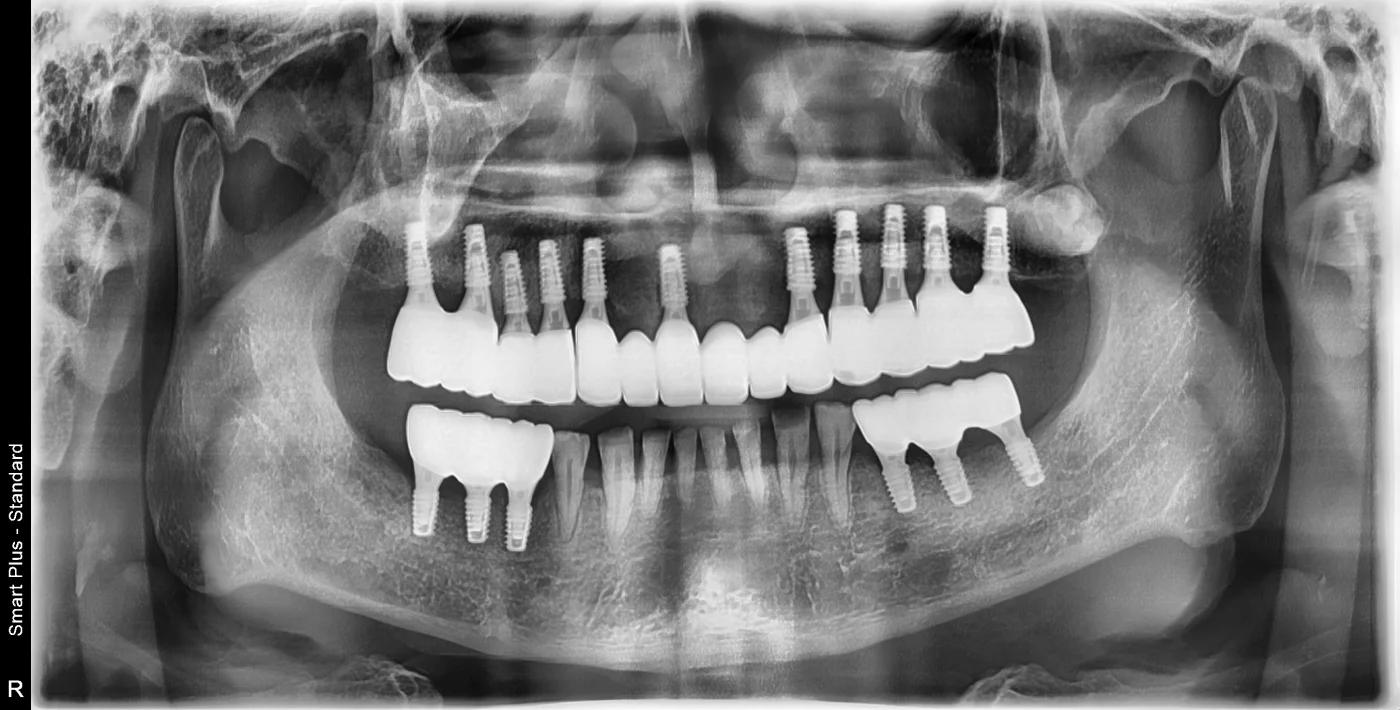
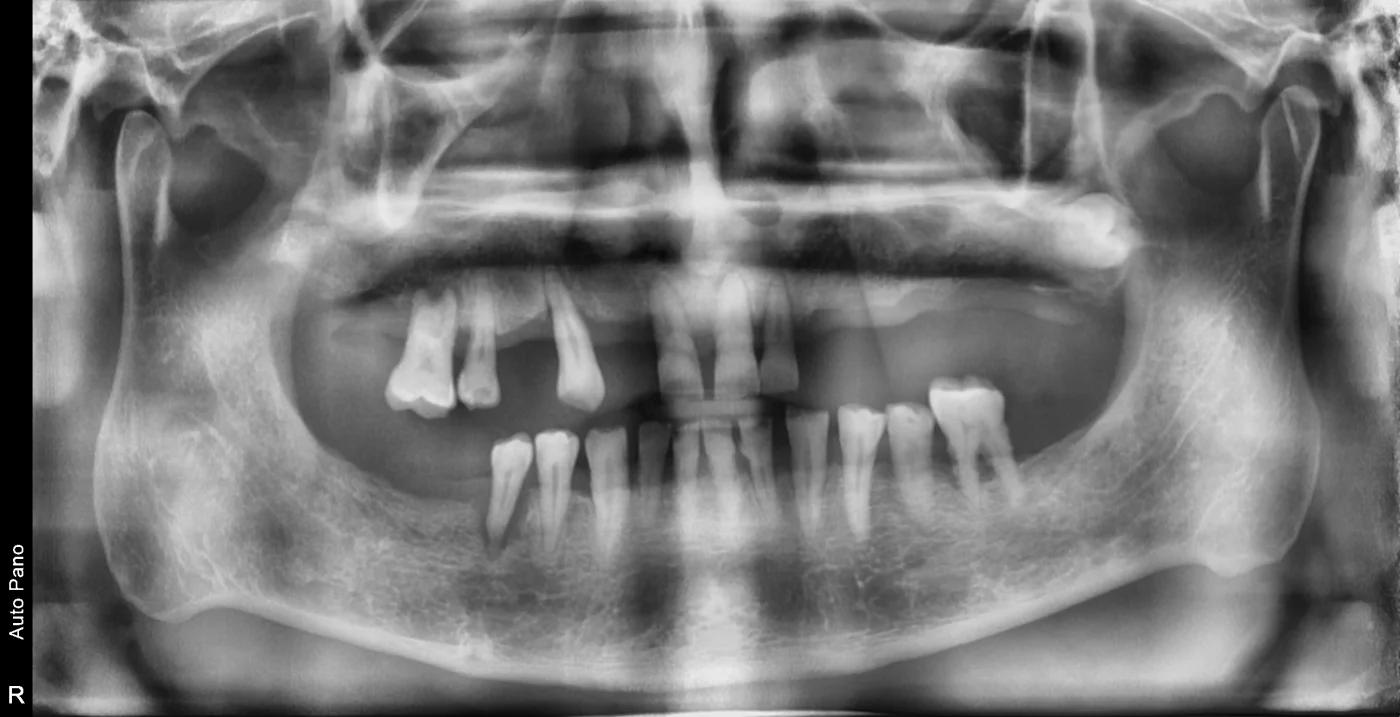
Results differ from person to person, and side effects are possible. These photographs were taken under the same conditions.
Full-arch treatment is a long road. Our team will be with you the whole way.
- Finding
- The back teeth on both sides had been missing for a long time, so all the chewing was being done on the front teeth.
- Treatment
- Teeth that could not be kept were extracted and implants were placed on both sides.
Results differ from person to person, and side effects are possible. These photographs were taken under the same conditions.
Full-arch implants — questions we are often asked
- How long does full-arch treatment take?
- It depends on your own case, but usually three to six months from the first surgery to the final bridge. Temporary teeth can sometimes be fitted at the start, so the months in between are not spent without teeth. You get the schedule for your own case after the CT scan.
- Can I have this instead of a denture?
- It depends on the bone. We look at how much bone there is and what condition it is in on the CT scan, and then go through which options are open to you. A denture and an implant-supported bridge are different things rather than a better and a worse one, and which suits you is a conversation, not a rule.
- What are All-on-4 and All-on-6?
- They are ways of supporting a full arch of teeth on four or six implants rather than one implant per tooth, by angling the implants to use the bone that is available. Whether four, six or another number suits your jaw is decided from the CT scan.
- I may leave Korea in a year — should I start?
- Tell us at the first visit. Full-arch treatment runs over several months with visits in between, and the final bridge is fitted at the end. Knowing your timing lets us talk honestly about what can and cannot be finished before you go, rather than starting something you would have to interrupt.
- Is any of this covered by insurance?
- Implants are covered by National Health Insurance only in the limited cases NHIS defines, so full-arch treatment is generally paid by the patient. Extractions, gum treatment and examinations around it may be covered. Bring your Alien Registration Card and we will check what applies before you decide.
Medical review
The medical information on this page was reviewed by Dr. Kim Ki-young (Specialist in Advanced General Dentistry · Clinic director). Last reviewed
This is general medical information. It does not replace a diagnosis or treatment plan for your own condition. If you have symptoms, please see a dentist.